
the long game – the upgrading programs
As you may know by now, Australia’s Damara gene pool is small. A founding importation, one supplementation by means of frozen embryo importation (read about that here), and the hard work of our historical studs to keep records and maintain the population. One response to a narrow gene pool is to work with what exists, and 500 provable ewes – our vital population – should be a sufficient base for security, but the reality is that many of these animals are already related. As such, another response is to do some dedicated work on expanding it, and it’s one of the reasons we are developing an active upgrading program alongside our purebred stud.
A foundation registry, or upgrading program is that approach. At the start of the century, many Damara dispersed into small flocks, pockets of purebreds remaining, or mixed flocks running with Damara rams. When that animal is found, females with strong Damara type — the distinctive tail, the correct body structure, the characteristic behaviours, even better some documentation or known history of her origins — become a candidate for a F3 / foundation register. She’s not able to claimed as purebred, regardless how much she appears to be, simply because her linage can not be proven. But she is a starting point, and with assessment and approval from the members of Damara Sheep Breeders Society of Australia, she will be allocated a filial generation number (click here for the process) – which can not be below a F3. From that ewe, the arithmetic of upgrading takes over. Bred to a registered purebred Damara ram, her progeny are F4 — 93.75% percent Damara. Breed those F4 females back to another purebred ram and you have F5 at 96.8% – this is threshold at which most breed societies recognise full registration. Beyond that, F6 reaches 98.4%, F7 hits 99.2% and by F8, you’re at 99.6%. On paper, that’s a few generations of disciplined breeding. In practice, it’s considerably longer.
Sheep, unfortunately, don’t read schedules. A ewe you’ve invested two seasons in produces ram lambs. Then more ram lambs. Then, if she’s particularly committed to her plan, more ram lambs again (we won’t name names but they know who they are). The ewe lambs you need to advance the line arrive on their own timeline, and there’s not a shortcut – each generation is eight months to a calendar year, and a program started today won’t produce F5 animals suitable for breeding for at least two years, – and that’s with everything going right, which is female lambs confirming to standards.
The process is slow – but it is slow precisely because it matters, and it is important to do the work properly, so that the breed remains true.
High-percentage animals — namely F4s at 93.75% — are not purebred Damaras in the stud sense. But they carrying almost the full complement of Damara genetics, presenting to type, and performing accordingly. For mixed flock operations — producers integrating Damara influence into an existing enterprise without committing to a full purebred program — these animals can be great additions. They bring parasite resilience, fat-tail energy storage, and adaptation to marginal country, at a price point well below registered purebred stock. They are not a consolation prize – they are a different tool for a different job.
The longer purpose of the upgrading program, though, is the gene pool itself. Animals that reach F5, F6 and beyond and earn full registration don’t just represent a successful project — they represent recaptured genetics entering the stud register. Genetics that weren’t there before. In a breed where the founding numbers were always limited and every generation of casual crossbreeding or undocumented breeding represents permanent loss, documented upgrading in the other direction can be a positive – even if time costly – exercise.
You will never find our F4s and F5s publicly listed for sale with our purebred stock – however we often have wethers and sometimes rams or ewes available from this program. Please contact us to discuss as we need to ensure buyers understand the purchase.
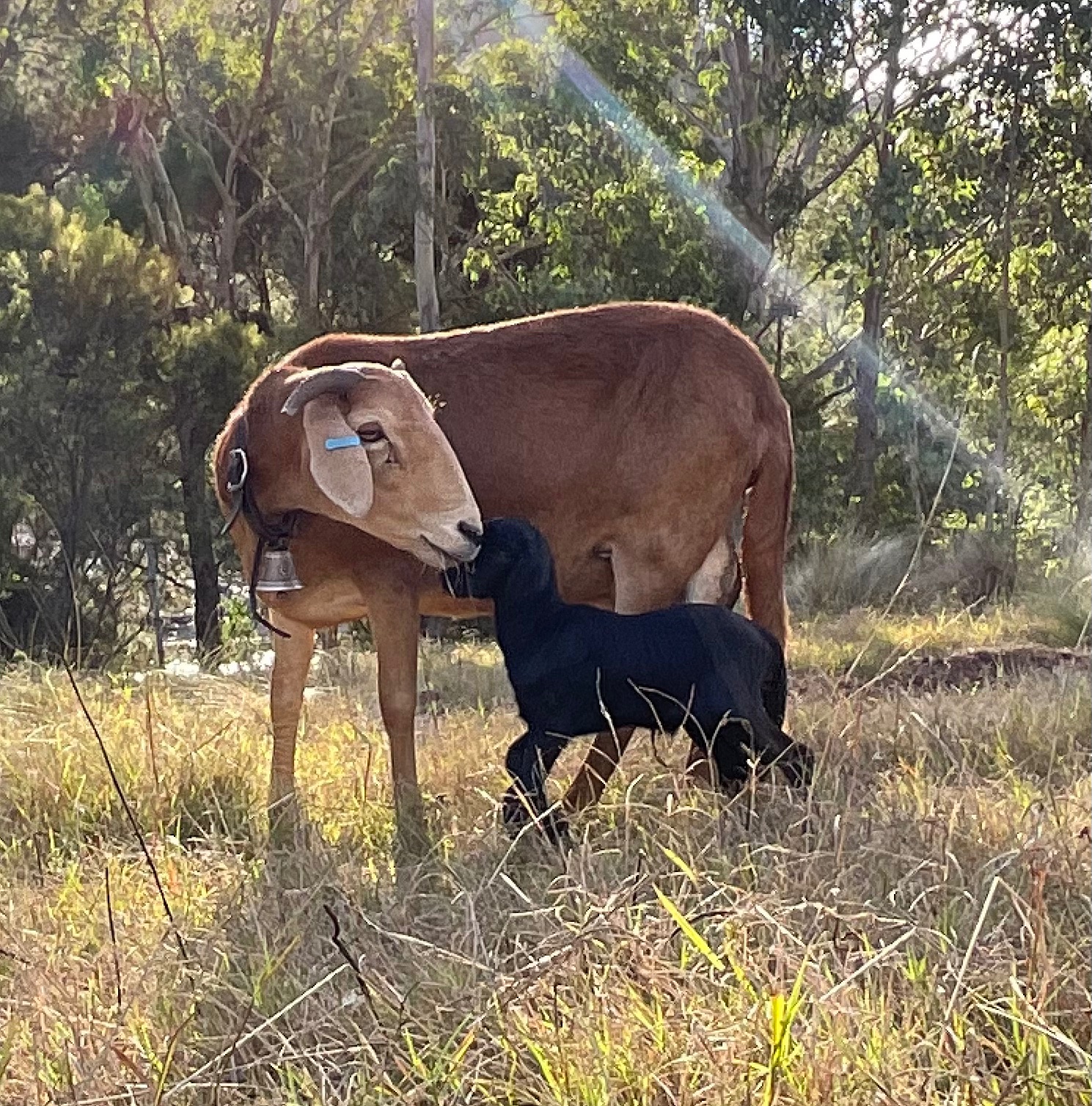
Photos of Frey and Gala, two of our society approved F3 ewes in the program – two to three more ewe generations to go!
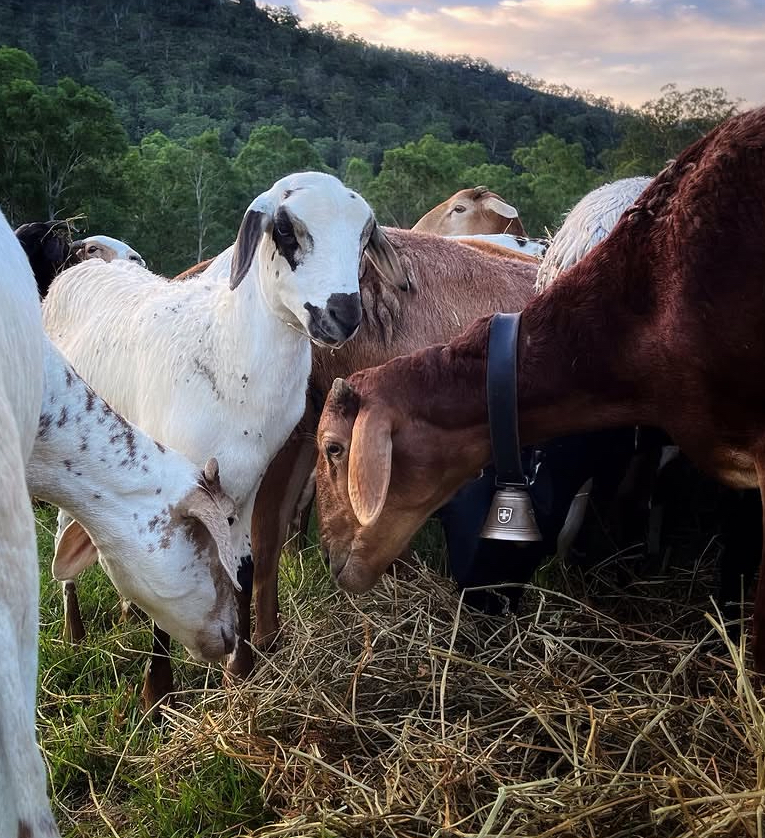
Do you have, or do you know of any Damara you believe to be of purebred origins, or with any documented or known history? We would love to hear about them – please contact us!
 WILD VALLEY DAMARA